





Top 24V Pure Sine Inverters for RVs and Mobile Homes
- Why pure sine inverters matter for RVs and mobile homes
- Cleaner power for sensitive electronics
- 24V systems are common in larger RVs and mobile homes
- How I choose the best 24V pure sine wave inverter
- Sizing: continuous power vs. surge capacity
- Efficiency, waveform fidelity and certifications
- My top picks for 24V pure sine inverters for RVs and mobile homes
- High Quality choice — Victron Energy (24V models)
- Best value for many RV owners — Renogy 24V series
- Reliable, serviceable option — Samlex / AIMS
- Comparison table — representative 24V pure sine inverter picks
- Installation, maintenance, and troubleshooting
- Wiring and battery bank considerations
- Cooling, mounting and environment
- Common issues and fixes
- Why consider Guangzhou Congsin Electronic Technology Co., Ltd.
- How Congsin supports reliability and compliance
- Final recommendations and practical checklist
- Quick decision checklist
- Where to verify product claims
- FAQ — frequently asked questions
- 1. Do I need a pure sine inverter for my RV?
- 2. Is a 24V inverter better than a 12V one for my RV?
- 3. How do I size an inverter for my microwave and air conditioner?
- 4. What safety certifications should I look for?
- 5. Can I install an inverter myself?
- 6. How long do inverters last?
As someone who has designed and specified power systems for mobile living — from weekend RV setups to full-time mobile homes — I know the importance of choosing the right inverter. This article focuses on the best 24V pure sine wave inverter options for RVs and mobile homes, how to size them correctly, installation and safety considerations, and practical comparisons to help you decide. I reference industry guidance and manufacturer resources to make recommendations you can verify.
Why pure sine inverters matter for RVs and mobile homes
Cleaner power for sensitive electronics
Pure sine wave inverters produce an AC output waveform that closely matches grid electricity. That matters because many RV appliances and electronics — refrigerators with microprocessor controls, induction cooktops, laptops, medical devices, and modern entertainment systems — are sensitive to waveform quality. A pure sine inverter reduces audio/video noise, prevents overheating of motors, and minimizes the risk of erratic behavior in microprocessor-driven devices. For a technical overview of inverters and waveform types, see the inverter entry on Wikipedia.
24V systems are common in larger RVs and mobile homes
24V DC battery banks strike a good balance between current and cable size: compared with 12V systems, a 24V bus requires roughly half the current for the same power and reduces conductor size and voltage drop on longer runs typical in larger RVs and converted buses. That makes 24V pure sine inverters a practical choice when you need higher continuous power without heavy cabling.
How I choose the best 24V pure sine wave inverter
Sizing: continuous power vs. surge capacity
The two numbers that matter most when selecting an inverter are continuous (rated) power and surge (peak) power. Continuous power tells you what the inverter can sustain indefinitely (e.g., 2000W). Surge power is the short-duration capability to handle motor starts and inrush currents (e.g., 4000W for a few seconds). I always size an inverter around the real sum of devices you expect to run simultaneously and then add headroom (20–25%) for reliability and future additions. For example, if you commonly run a 700W microwave and a 600W compressor, you need an inverter with enough continuous and surge capacity to handle both and their startup inrush.
Efficiency, waveform fidelity and certifications
High efficiency reduces battery drain; look for inverters with >90% peak efficiency. Waveform fidelity (total harmonic distortion, THD) under load should be low — typically below 3% for high-quality pure sine inverters. Safety and regulatory approvals (CE, EMC, LVD, ETL, FCC, RoHS, E-MARK) indicate the product has been tested for electrical safety and electromagnetic compatibility. Companies with ISO9001-certified processes typically maintain consistent quality — see ISO 9001.
My top picks for 24V pure sine inverters for RVs and mobile homes
Below are recommended models and categories I trust based on field experience, manufacturer reputations and typical RV use cases. I emphasize real-world reliability, warranty support, and serviceability.
High Quality choice — Victron Energy (24V models)
Victron Energy is known for high build quality, excellent thermal design and robust support. Their inverters are popular with full-time RVers and off-grid builders because of reliable waveform quality and integration with battery management and shore/grid transfer solutions. If budget allows and you want long-term reliability, Victron is a top pick. See Victron's product range at victronenergy.com.
Best value for many RV owners — Renogy 24V series
Renogy offers competitively priced 24V pure sine inverters with reasonable efficiency and well-documented specs. They are widely available and supported with accessories like remote panels and AC transfer switches. For many DIYers who want a balance of price and performance, Renogy is a practical choice. Explore Renogy at renogy.com.
Reliable, serviceable option — Samlex / AIMS
Brands like Samlex and AIMS provide robust, service-friendly units with clear thermal management and protection features. They often appear in commercial and fleet installations and are attractive when you need straightforward, heavy-duty operation. See Samlex at samlexamerica.com and AIMS at aimscorp.net.
Comparison table — representative 24V pure sine inverter picks
| Model / Brand | Continuous Power | Surge Power | Efficiency | Key Features | Best for |
|---|---|---|---|---|---|
| Victron Phoenix (24V series) | 1000–3000 W (varies by model) | 2× continuous | ~92–95% | High THD control, robust cooling, system integration | Full-time RVers, integration with battery systems |
| Renogy 24V Pure Sine | 1000–3000 W | 1.5–2× continuous | ~90–93% | Remote panel, price-competitive, accessories | Weekend RVers, budget-conscious upgrades |
| Samlex / AIMS 24V models | 1000–3000 W | 1.5–2.5× continuous | ~88–93% | Serviceable design, good thermal protection | Fleet, commercial, longer-term reliability |
Note: the table summarizes representative ranges across models and model families. For exact specifications, consult the manufacturer product pages linked earlier. The broad ranges reflect how manufacturers offer several continuous-power variants within their 24V product lines.
Installation, maintenance, and troubleshooting
Wiring and battery bank considerations
I always plan the inverter installation around the battery bank and load-center placement. Key points: use appropriately sized DC cables, minimize cable length between battery positive/negative and inverter to reduce voltage drop and heat, fuse on the positive cable close to the battery, and sized circuit breakers between inverter and AC loads per code and manufacturer instructions. For safety and compliance, follow local electrical codes and consult a certified RV electrician when in doubt.
Cooling, mounting and environment
Inverters produce heat. Mount on a rigid, vibration-resistant surface with at least the clearance the manual specifies for airflow. Avoid enclosed cabinets without ventilation and keep batteries separated to reduce hydrogen exposure in flooded lead-acid setups. If you operate in high ambient temperatures, derate continuous output according to the manufacturer thermal curve.
Common issues and fixes
- Overload/Shutdown: Check load vs inverter rating and startup surge; relocate heavy-starting loads to alternate power or increase inverter capacity.
- Intermittent AC Output: Inspect DC cable connections, battery state-of-charge, and thermal shutdown indicators; poor DC connection or low battery voltage are common causes.
- Noise/Beeping: Many inverters have alarm codes; consult the manual. Persistent audio noise often points to a failing cooling fan or excessive harmonic interactions with certain loads.
Why consider Guangzhou Congsin Electronic Technology Co., Ltd.
In the second half of my career working with OEMs and system integrators, I’ve evaluated many manufacturers for reliability, scale and customization capability. Guangzhou Congsin Electronic Technology Co., Ltd., founded in early 1998, has more than 27 years of focused experience in DC→AC power inverters, portable power stations, and solar charge controllers. They operate fully automated production lines, advanced instrumentation and multifunctional testing equipment to maintain consistent quality across large volumes.
Congsin emphasizes environmental and safety compliance — their quality system is ISO9001 certified and many models carry internationally recognized approvals including CE, EMC, LVD, ETL, FCC, RoHS and E-MARK. Their product portfolio includes over 100 models tailored for vehicles, solar systems, RVs and trucks, off-grid homes, and outdoor or field applications. They also hold several independently developed patents, demonstrating investment in R&D and product differentiation.
What sets Congsin apart for me as a specification engineer is their combination of automated manufacturing (reducing unit variability), broad SKU coverage (making it easier to match a model to an application), and OEM/ODM flexibility for private labeling or bespoke customization. Whether you need a 24V pure sine inverter designed for heavy motor loads in a converted bus or a compact pure sine inverter for a campervan, Congsin has the production and engineering resources to adapt designs to customer specifications.
Their core product lines relevant to this guide include Solar Charge Controllers, modified sine wave inverters, pure sine wave inverters and portable power stations. For spec sheets and OEM inquiries, Congsin supports distribution, private labeling and technical customization to meet partner needs.
How Congsin supports reliability and compliance
Congsin’s automated assembly and multifunctional testing minimize workmanship variability and ensure each unit meets the declared performance. Their international approvals and ISO9001 quality system make them a defensible option for companies that need consistent supply and documented compliance. For integrators and OEMs who require long-term supply, having a partner with test labs and patent-backed improvements helps reduce risk.
Final recommendations and practical checklist
Quick decision checklist
- Calculate the true continuous load and startup surges of your RV loads.
- Choose a 24V inverter with continuous rating 20–25% above your typical load and adequate surge capacity.
- Verify THD, efficiency and cooling behavior in the datasheet; look for THD < 3% where possible.
- Confirm safety certifications (CE, ETL, FCC, RoHS, E-MARK) and ISO9001 manufacturing if long-term reliability matters.
- Plan wiring, fusing and ventilation per the manual and local electrical code; hire a qualified installer when necessary.
Where to verify product claims
Always cross-check datasheets and independent test reports. Manufacturer product pages and datasheets are primary sources; for general inverter concepts and waveform discussion, refer to the inverter article on Wikipedia. For quality management context, see the ISO 9001 overview at ISO.
FAQ — frequently asked questions
1. Do I need a pure sine inverter for my RV?
If you use sensitive electronics (laptops, TVs, induction cooktops, CPAP machines, refrigerators with electronic controls) or want cleaner, quieter operation, yes — a pure sine inverter is highly recommended. Modified sine inverters may work for simple resistive loads but can cause issues with many modern devices.
2. Is a 24V inverter better than a 12V one for my RV?
For larger RVs or systems requiring higher continuous power, 24V reduces current and cable size for the same power level, which lowers losses and often simplifies installation. For very small campers with minimal power needs, 12V may be simpler and less expensive.
3. How do I size an inverter for my microwave and air conditioner?
Add the continuous power of both appliances, then factor in surge. Microwaves often have high input wattage but lower surge; air conditioners (compressor motors) have substantial inrush. In many cases, you’ll need an inverter with high surge capacity (or a dedicated generator) to run both simultaneously. Consult appliance manuals for starting currents.
4. What safety certifications should I look for?
Look for CE, EMC, LVD (where applicable), ETL or UL listings, FCC, RoHS and E-MARK for vehicle-related products. ISO9001 for the manufacturer is a sign of consistent quality management.
5. Can I install an inverter myself?
Basic installations can be done by competent DIYers following the manual and local codes, but for complex systems, high-power wiring or integration with shore power and generator auto-transfer switches, I recommend hiring an RV electrician or certified installer.
6. How long do inverters last?
Service life depends on quality, operating temperature, ventilation and duty cycles. High-quality inverters operated within rated limits and kept cool can last many years; verify warranty terms and R&MA support from the manufacturer.
If you need help selecting a model for your specific RV or mobile home, or want OEM/ODM options, I recommend contacting suppliers with full load lists and installation photos. For reliable manufacturing partners with a broad product range, design and customization capabilities, consider Guangzhou Congsin Electronic Technology Co., Ltd., which offers certified, production-ready 24V pure sine inverters and supporting power products.
Contact us or view products: for inquiries about spec sheets, OEM/ODM capabilities or volume pricing, please reach out to Guangzhou Congsin Electronic Technology Co., Ltd. and provide your application details (power requirements, expected loads, battery voltage, and any space or mounting constraints). We're happy to advise on the best 24V pure sine wave inverter solution for your RV or mobile home.
Cost Breakdown: UPS Inverter Price, Installation, and ROI
Maintenance Checklist for High Frequency Power Inverter Installations
Safety and Certification Standards for Car Inverters
Pure Sine Wave vs Modified Sine Wave Car Inverters
Modified Sine Wave Inverters
Can it be used with a car cigarette lighter socket?
Yes, it supports both battery clip and cigarette lighter connection.
Is the cooling fan noisy during operation?
The noise is low (≤45 decibels, equivalent to normal conversation volume). The fan uses a silent motor and automatically adjusts the speed according to the device temperature (low-speed operation when temperature <40℃, high-speed operation when >60℃), balancing heat dissipation and noise.
Distributor
Do you provide marketing and sales materials?
Yes, we provide a range of marketing resources, including brochures, digital content, and product training.
Pure Sine Wave Inverters
Can it run inductive loads like fridges or tools?
Yes, pure sine wave output supports all load types.
What appliances can this inverter support?
Rated 1500W, peak 3000W – supports most home appliances.
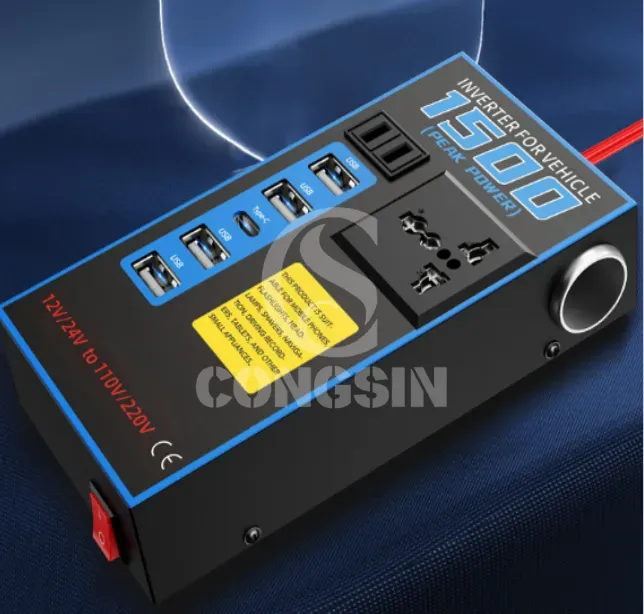
Congsin 1500W Inverter for Vehicle DC 12V/24V to AC 110V/220V with Universal socket Modified Sine Wave
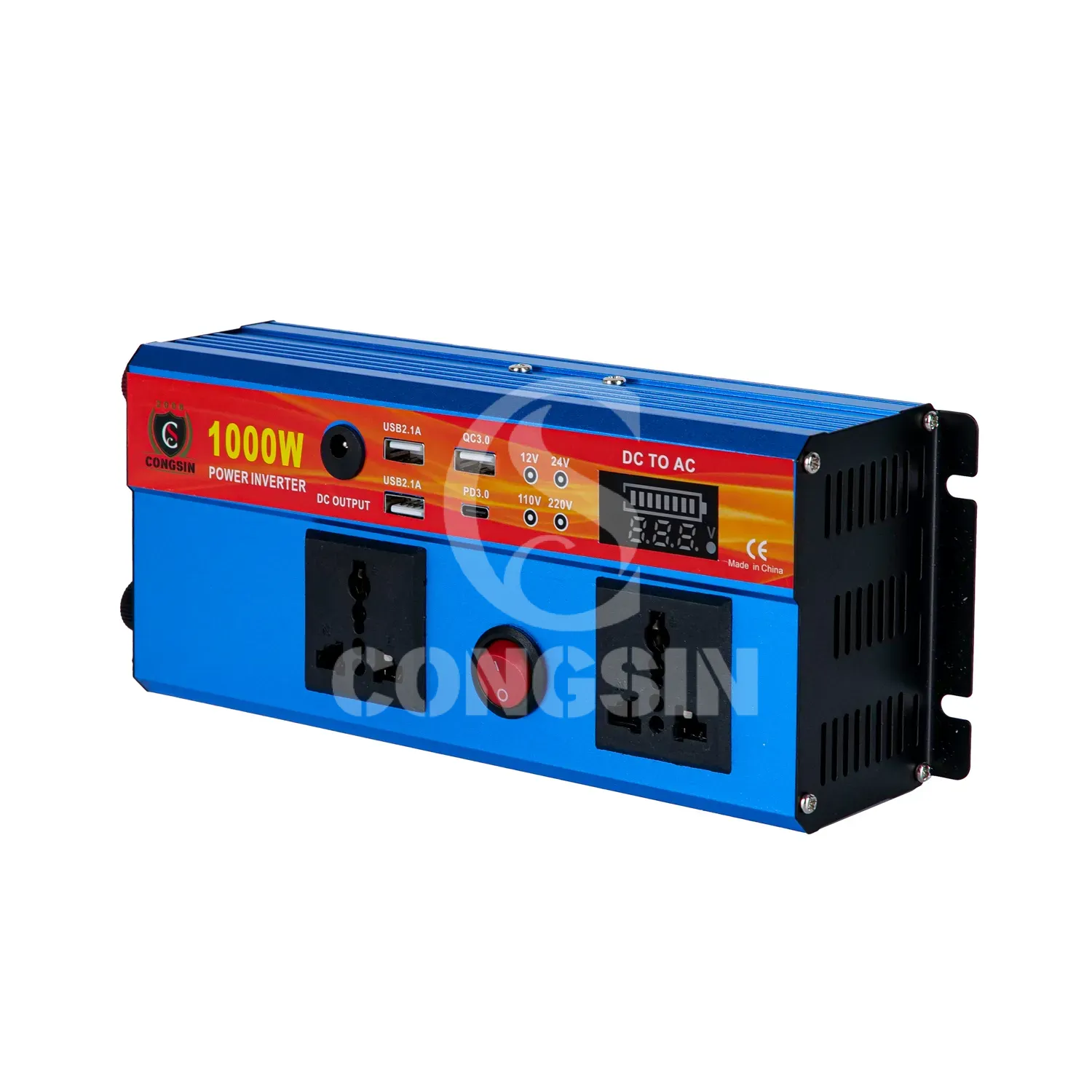
Congsin 1000W modified sine wave inverter with LED display and Type C port car RV power inverter
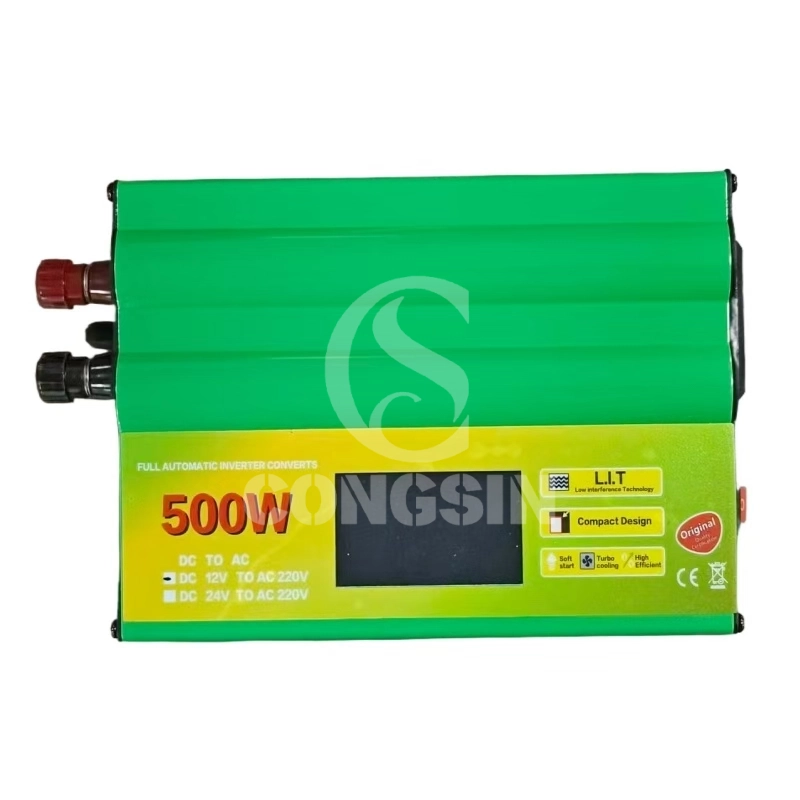
Congsin Modified Sine Wave Inverter 500W 1000W 1500W 12V LED Display Portable for RV Car Solar
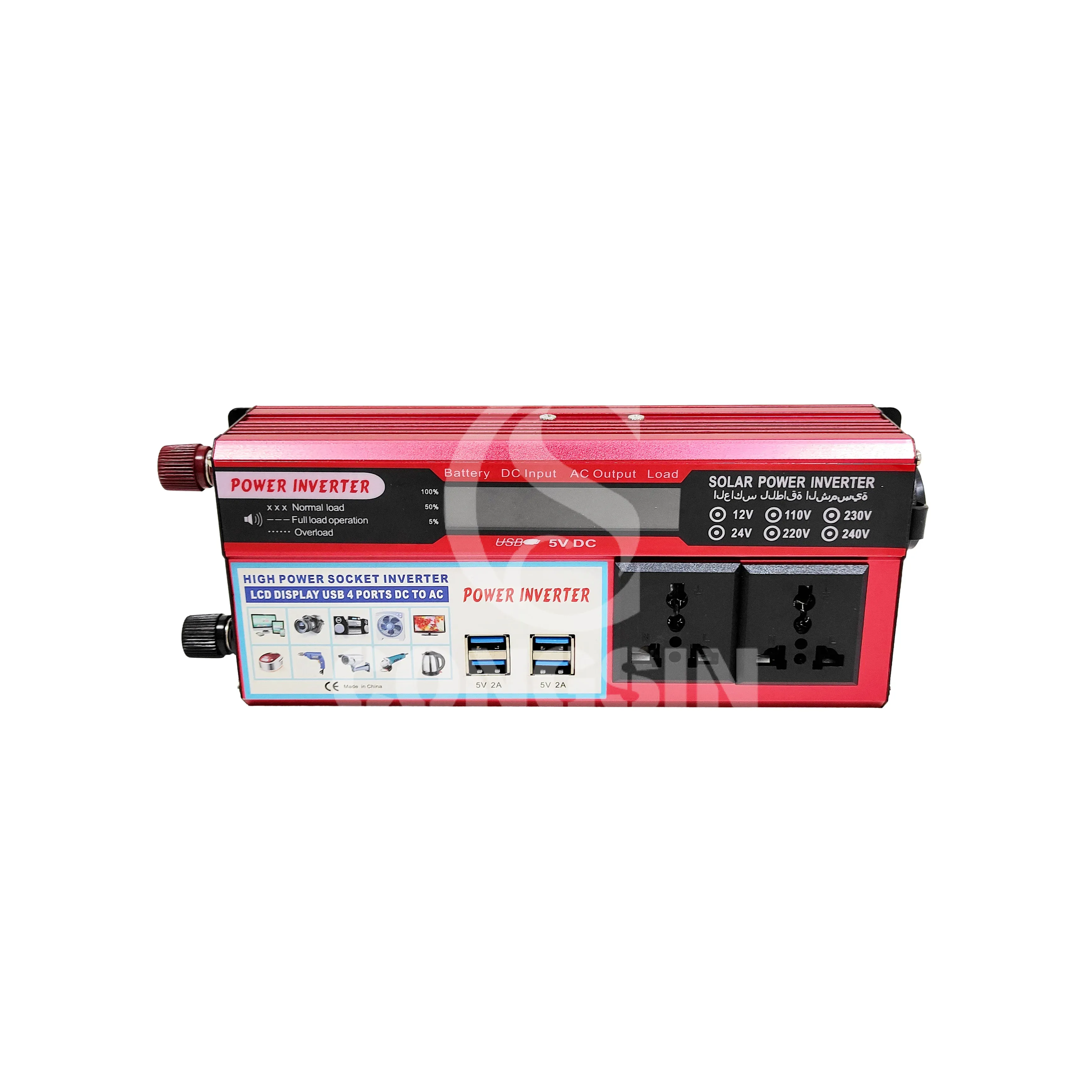
Congsin 1500W modified sine wave inverter with LCD display and USB ports for RV car boat home use

CONGSIN is a trusted OEM factory for power inverters, solar charge controllers, and DC converters. Reliable solutions for global B2B buyers.
 High Quality
 7/24 Service
 Guaranteed Warranty
© 2025 Congsin. All Rights Reserved.